logo
پیام فرستادن
Shenzhen Ofeixin Technology Co., Ltd
درباره ما
شریک حرفه ای و قابل اعتماد شما
QOGRISYSبه طور حرفه ای متعهد به ارائه راه حل های اتصال کامل اینترنت اشیا به مشتریان است.این شرکت بر صنعت ارتباطات متمرکز است.پس از سالها تجربه در بازار صنعت و خدمات مشتری، این شرکت شجاعت رویارویی با چالش های فنی شدید را دارد و به مشتریان در حل مشکلات کمک می کند.این شرکت دارای منابع پشتیبانی با کیفیت بالا از اتصال بی سیم برد کوتاه پهن باند، ارتباطات سلولی شبکه گسترده تا صنعت ادغام عمودی عمیق است و خدمات عملکردی همه جانبه و راه حل های فناوری محصول عالی را به مشتریان ارائه می دهد.محصولات اصلی این ش...
بیشتر بدانید

0

سال تاسیس

0

میلیون+
کارمندان

0

میلیون+
مشتریان سرویس داده شده

0

میلیون+
فروش سالانه
چین Shenzhen Ofeixin Technology Co., Ltd کیفیت بالا
مهر اعتماد، چک اعتبار، RoSH و ارزیابی توانایی تامین کننده. شرکت دارای سیستم کنترل کیفیت و آزمایشگاه تست حرفه ای است.
چین Shenzhen Ofeixin Technology Co., Ltd توسعه
تیم طراحی حرفه ای داخلی و کارگاه ماشین آلات پیشرفته می تونیم با هم همکاری کنیم تا محصولاتی که شما نیاز دارید رو توسعه بدیم.
چین Shenzhen Ofeixin Technology Co., Ltd تولید
ماشين هاي پیشرفته اتوماتيك، سيستم کنترل سختي فرآیند ما مي تونيم تمام ترمينال هاي الکتريکي رو فراتر از نياز شما بسازيم
چین Shenzhen Ofeixin Technology Co., Ltd 100درصد خدمات
بسته بندی عمده و سفارشی کوچک، FOB، CIF، DDU و DDP. اجازه بدید به شما کمک کنیم تا بهترین راه حل را برای همه نگرانی هایتان پیدا کنید.

کیفیت ماژول WiFi7 & ماژول WiFi HaLow سازنده

محصولاتی را بیابید که نیازهای شما را بهتر برآورده کنند.
موارد و اخبار
جدیدترین نقاط داغ.
به تاخير خداحافظي کنيد! اين ماژول عالي تکنولوژي O9201SB با ارتقاء کامل، انقلاب در تفريحات خانگی را به ارمغان مي آورد!
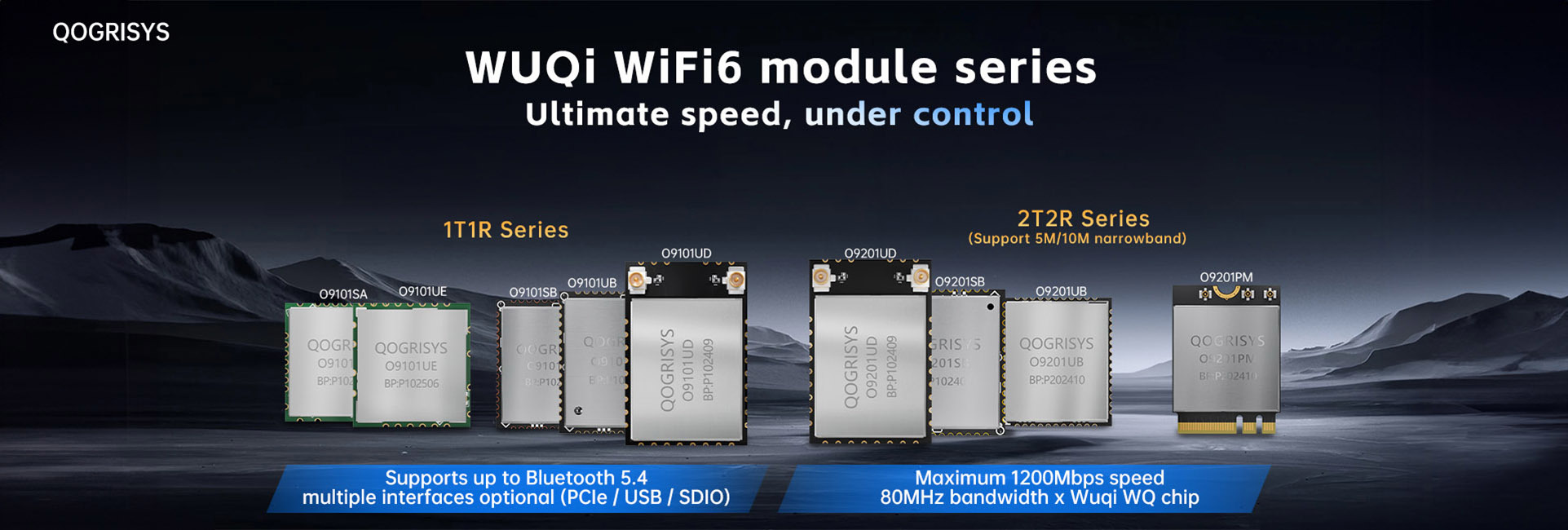
شب دیر شده، و شما در برنامه ی مورد علاقه ی خود هستید، وقتی که ناگهان، صفحه ی نمایش به یک نمایش اسلاید تبدیل می شود. کل خانواده برای پهنای باند مبارزه می کنند، و تاخیر بازی شما در حال افزایش است.آیا این مشکلات شبکه ناامید کننده تجربه خانه هوشمند شما را مختل می کند؟نگران نباش!کوگریس یک ماژول پیشرفته مجهز به **Wi-Fi 6 + BT5.4** توسعه داده است️O9201SBکه به آرامی در صنعت جعبه های ضبط با یک "ارتقاء تجربه" بی نظیر انقلاب ایجاد می کند! 1نقاط درد تفریح خانگی: آیا دستگاه ضبط شما واقعاً هوشمند است؟ با افزایش فیلم های 4K / 8K با وضوح فوق العاده، بازی های ابری و دستگاه های هوشمند خانگی، شبکه های خانگی تحت فشار زیادی قرار دارند: "یک شبکه، دستگاه های متعدد" منجر به تاخیر می شود**: وقتی تلویزیون، تلفن، تبلت و اسپیکر هوشمند همه آنلاین هستند، Wi-Fi 4/5 به سادگی نمی تواند به دنبال آن باشد!   ویدئوهای با وضوح بالا به موزاییک تبدیل می شوند: ویدئوهای 8K نیاز به بیش از 100Mbps پهنای باند در ثانیه دارند و ماژول های سنتی برای ارائه تلاش می کنند.   هزینه های بالای تراشه های هسته ای**: سفارشی سازی پیچیده و گران است و تولید کنندگان را ناامید می کند.   2. معرفيO9201SB: Wi-Fi 6 + BT5.4 دوباره تعریف می کند "سلیم" 1سرعت افزايش: پخش فوري ويديو 8K تکنولوژی همزمان دو باند**: 2.4GHz برای نفوذ ثابت به دیوار، 5GHz برای سرعت های سریع، با نرخ های 2T2R تا 1200Mbps.با صفر بافری در هنگام کشیدن نوار پیشرفت! MU-MIMO + OFDMA**: دستگاه های متعدد می توانند به طور همزمان بدون رقابت برای پهنای باند متصل شوند. 2بلوتوث 54: باز کردن امکانات هوشمند جدید کنترل از راه دور بلوتوث با پاسخ فوری**: از کنترل صوتی حساس تر و عملکرد بدون مشکل لذت ببرید. اتصال بلندگوهای خارجی و کنترل کننده های بازی با تاخیر صفر**: به یک تجربه بازی و سرگرمی کاملا غوطه ور شوید.   3تکنولوژی پیشرو + خدمات سطح بالا: یک برنده برای تولید کنندگان و کاربران 1. خودکفايي و امنيت ، تامين امنيت تراشه ها مطابق با استانداردهای فنی بین المللی هستند که ثبات و امنیت را تضمین می کنند. رمزگذاری داده ها + سرورهای محلی حفاظت از حریم خصوصی را فراهم می کنند. 2. سفارشی سازی انعطاف پذیر، پاسخ سریع یک تیم تحقیق و توسعه حرفه ای از "تناسب عمیق" پشتیبانی می کند، و سفارشی سازی را از طراحی تا تولید انبوه در تنها 30 روز تکمیل می کند. یک زنجیره تامین بهینه شده هزینه ها را 20 درصد کاهش می دهد و چرخه های تحویل را 50 درصد کوتاه می کند.   4آینده اینجاست: گرفتن "دروازه طلایی" خانه های هوشمند برای کاربران،O9201SBارائه می دهد یک تجربه بی نقص و بدون مشکل ارتقا.این یک ابزار قدرتمند برای کاهش هزینه ها و افزایش کارایی است.جعبه های ضبط شده مجهز به این ماژول نه تنها می توانند مرکز سرگرمی خانگی باشند بلکه همچنین می توانند به راحتی با لوازم خانگی هوشمند ادغام شونداین باعث می شود که آنها دروازه اصلی بازار خانه های هوشمند تریلیون دلاری را به دست آورند!     از "قابل استفاده" به "بهترین" و از وابستگی تکنولوژیکی به رهبری تکنولوژیکی،O9201SBماژول توسعه یافته توسطکوگریس قوانین صنعت دستگاه را با عملکرد برجسته و خدمات سطح بالا بازنویسی می کند.O9201SBنهانتخاب فقط یک ماژول نیست بلکه انتخاب یک "انقلاب تجربه" است که به آینده گرا است.  
O9201UB وضعیت فعلی صنعت پروژکتور: نقاط درد اتصال بی سیم نیاز به پیشرفت فوری دارد
به عنوان پروژکتورهای هوشمند امروزه به طور فزاینده ای رایج می شوند، خواسته های کاربران برای کیفیت تصویر و عملکرد به طور مداوم در حال افزایش است.ثبات و سرعت اتصال بی سیم تبدیل به تنگه هایی شده است که مانع از ارتقاء تجربه کاربر می شود: · انتقال محتوای 4K / 8K خرخر: ویدئوهای با وضوح بالا نیاز به پهنای باند بسیار بالایی دارند و ماژول های Wi-Fi سنتی اغلب در محیط های پیچیده از تاخیر و بافر رنج می برند. · تداخل شدید بین دستگاه های چندگانه: هنگامی که پروژکتورها به طور همزمان با چندین دستگاه مانند تلفن های هوشمند، تبلت ها و اسپیکر متصل می شوند، ازدحام شبکه اغلب منجر به قطع سیگنال می شود. · تجربه ی بد از دستگاه های محیطی بلوتوث: پروتکل های قدیمی تر از تاخیر بالا و قابلیت های ضعیف ضد تداخل رنج می برند، که منجر به اتصال ناپایدار برای بلندگوها، کنترل کننده های بازی و سایر دستگاه ها می شود. · تضاد بین مصرف برق و تبعید گرما: انتقال سرعت بالا با مصرف انرژی بالا همراه است، که عمر باتری دستگاه را تحت تاثیر قرار می دهد و حتی باعث مشکلات تبعید گرما می شود.       این نقاط درد باعث تضعیف اعتبار برند شما می شود منO9201UBماژول: "قلب بی سیم" برای پروژکتورها طراحی شده QOGRISYSبرای 12 سال به طور عمیق در ارتباطات بی سیم درگیر شده است.ماژول دو حالت Wi-Fi 6 + بلوتوث 5.4O9201UBبا چهار مزیت اصلی برای بازسازی تجربه بی سیم در سناریوهای پیش بینی طراحی شده است: 1.Wi-Fi 6 انتقال فوق العاده سریع، 4K/8K بی وقفه و بدون وقفه · دو باند همزمان، سوئیچ هوشمند: 2.4GHz قابلیت نفوذ دیواری قوی را ارائه می دهد، سرعت می تواند تا 1200Mbps باشد در حالی که 5GHz، پشتیبانی از حالت 2T2R DBAC و حالت 1T1R DBDC،اجازه استفاده همزمان از باند های فرکانسی مختلف برای دسترسی به اینترنت و پخش صفحه نمایشخداحافظي کن خرگوش کردن · تکنولوژی MU-MIMO + OFDMA: پشتیبانی از انتقال با سرعت بالا بین دستگاه های متعدد به طور همزمان، اطمینان از نمایش پایدار و صاف حتی زمانی که کاربران متعدد شبکه را به اشتراک می گذارند. · تکنولوژی شکل گیری پرتو: موقعیت دستگاه را با دقت پیدا می کند، قدرت سیگنال را به طور پویا افزایش می دهد و مناطق مرده پروژکتور را از بین می برد و پوشش کامل سیگنال را در اتاق نشیمن یا کنفرانس تضمین می کند   ② بلوتوث 5.4 + تاخیر کم، "صفر ادراک" همگام سازی صوتی و تصویری · بلوتوث 2 مگابایت در ثانیه با سرعت بالا: اسپیکرهای بی سیم/ هدفون ها28ms(متوسط صنعت: 50ms) ، ارائه اثرات صوتی مانند کنسرت با "همگام سازی صوتی و تصویری". · فن آوری ضد تداخل AFH: به طور خودکار از کانال های 2.4G سرشار جلوگیری می کند، اجازه می دهد تا چندین دستگاه (کنترول از راه دور + میکروفون + بلندگو) بدون دخالت همزیستی داشته باشند و "پاسخ فوری" را برای کنترل صوتی فعال کنند. · تکنولوژی HCI: یک ذخیره میانگین را فراهم می کند، سازگار با نسخه های هسته؛ رابط USB همچنین می تواند به بلندگوها بلوتوث متصل شود، ارائه اثرات صوتی برتر، صرفه جویی در زمان عیب یابی،و کاهش استفاده از پین در رابط PCM   ③ اندازه کامپکت + مصرف انرژی کم، آزادی طراحی بیشتر · ابعاد فشرده: اندازه بسیار کوچک 15 × 13 × 2.3mm، مناسب برای طرح های پروژکتور بسیار نازک، صرفه جویی در فضای داخلی. · مدیریت انرژی هوشمند: مصرف انرژی همکاری Wi-Fi + بلوتوث 20٪ کاهش یافته است، که زمان اجرای پروژکتور باتری ساخته شده را 1.5 ساعت افزایش می دهد، اطمینان از قطع شدن در طول کمپینگ در فضای باز   4.سازگاری انعطاف پذیر، ادغام آسان · رابط USB 2.0: سازگار با مدل های اصلی پروژکتور، کاهش هزینه های توسعه برای تولید کنندگان. · گواهینامه های متعدد: از رمزگذاری WPA3 ، BLE Audio و سایر استانداردها پشتیبانی می کند ، امنیت و سازگاری داده ها را تضمین می کند. ​​II.اکنون از اقیانوس جدید آبی "پروژکتور بی سیم" استفاده کنید! بازار جهانی پروژکتورهای هوشمند تا سال 2025 بیش از 80 میلیارد دلار خواهد بود و تجربه بی سیم به یک عامل اصلی تصمیم گیری برای کاربران تبدیل می شود.O9201UBنه تنها " ابزار مشاهده " بلکهمراکز سرگرمی خانگی، مراکز همکاری تجاری، و دروازه های خانه هوشمند. سناریوهای سرگرمی خانگی: پخش صفحه نمایش بازی بی سیم: از انتقال 4K@60fps با تاخیر کم پشتیبانی می کند ، همراه با بلندگوهای بلوتوث غوطه ور.ادغام خانه هوشمند: اتصال مستقیم Wi-Fi به کنترل صفحه نمایش ها / چراغ ها، ایجاد یک سیستم تئاتر غوطه ور. سناریوهای دفتر تجاری: به اشتراک گذاری صفحه نمایش بی سیم چند دستگاه بین چندین دستگاه: پشتیبانی از نمایش از چندین ترمینال، بهبود بهره وری جلسه تا 50٪. بهینه سازی همکاری از راه دور: تخصیص پهنای باند هوشمند QoS اطمینان از ثبات کنفرانس های ویدئویی سناریوهای آموزشی: تضمین کلاس آنلاین: طراحی ضد تداخل نمایش نرم افزار دوره 4K را تضمین می کند. پشتیبانی آموزشی تعاملی: تاخیر میکروفون بلوتوث < 30ms، امکان تعامل معلم و دانش آموز بدون تاخیر. III.انتخابO9201UBیعنی شما بیشتر از یک ماژول به دست می آورید ▶تکنولوژی پیشرفته، معیار عملکرد:بر اساس پروتکل های IEEE 802.11ax و بلوتوث 5.4 ، عملکرد کاملاً از ماژول های سنتی فراتر می رود. ▶ تضمین خدمات:پشتیبانی فنی 7x24، ارائه خدمات جامع "ماژول + راننده + بهینه سازی سناریو". ▶ همکاری اکوسیستم، گسترش سناریوها:فراتر از پروژکتورها، می تواند با دستگاه های خانگی هوشمند (به عنوان مثال، چراغ ها، صفحه نمایش) ، به پروژکتورها کمک می کند تا به هاب های کنترل هوشمند ارتقا یابند. نتیجه گیری: آینده نمایش بی سیم به دست شماست! درO9201UBماژول، با مزایای اصلی آن "سریع، پایدار و کارآمد"، راه حل اتصال بی سیم نهایی را برای صنعت پروژکتور فراهم می کند.چه تجربه ی نهایی سینمای خانگی باشد یا همکاری کارآمد تجاری، مي تونه به راحتي اداره بشهQOGRISYS آماده همکاری با شما است، تغییر صنعت را از طریق نوآوری های تکنولوژیکی هدایت می کند، و هر پروژکتور را به یک دروازه برای "آزادی بی سیم" تبدیل می کند!
Photovoltaic New Energy: The Most Certain Incremental Market for PLC Modules
In the first half of 2026, China's newly connected photovoltaic (PV) capacity reached 71.77 million kilowatts, of which distributed PV accounted for 42.22 million kilowatts, or approximately 58.8%. Globally, according to the "Global and China Distributed PV System Market In-Depth Research and Consulting Analysis Report (2026)" released by IIM Information, as of the first half of 2026, the global cumulative installed capacity of distributed PV had exceeded 480 GW, with the Asia-Pacific region contributing more than 55% of the increase. It is projected that by the end of 2026, the global annual new installed capacity will reach between 98 GW and 115 GW, representing a year-on-year increase of approximately 12% . The large-scale production of distributed photovoltaics is propelling PLC (Power Line Carrier Communication) modules into a certain incremental market. This certainty stems from the convergence of three factors: mandatory policy support, the uniqueness of the technological path, and the completion of commercial validation. I. Policy-driven: Component-level safe shutdown becomes a global mandatory requirement The core application scenarios for PLC modules in the photovoltaic field are module-level rapid shutdown and module-level monitoring. These two functions are directly driven by mandatory standards in major global markets. In the North American market, NEC 2026 further revised the fast shutdown requirements of Article 690.12. According to SurgePV's NEC 2026 Fast Shutdown Compliance Guide, the 2026 version of NEC retains the existing voltage limit targets: conductors outside the array boundary must be reduced to no more than 30V within 30 seconds, and conductors inside the array boundary must be reduced to no more than 80V within 30 seconds or use certified PVHCS equipment . This means that each photovoltaic module needs to be equipped with a shutdown device with PLC communication capabilities. In the European market, the EN50065-1 standard clearly specifies communication equipment applicable to the frequency range of 3kHz to 526.5kHz on low-voltage power lines. Its typical applications include DC bus communication between photovoltaic panels and inverters in photovoltaic power generation systems. In the Chinese market, the new national standard GB/T 34932-2025 officially came into effect on April 1, 2026. Under the "four requirements" for dispatching, it mandates that new grid-connected equipment must support standard interfaces, collect data at a frequency of no less than one point every five minutes, and enforce identity authentication, data encryption, and access control. In 2026, the EU carbon tariff adjustment mechanism enters the mandatory compliance phase. Traditional inverter-level monitoring cannot meet the accuracy requirements for component-level carbon footprint tracing, making component-level power electronics and intelligent monitoring a crucial technological path for obtaining accurate carbon emission data . The core policy shift is that PLC communication modules are transforming from "optional accessories" in photovoltaic systems into "compliance necessities." Whether it's North America's rapid shutdown, Europe's module-level monitoring, or China's "four capabilities," all require reliable data communication links between module-level devices. II. Technology Adaptation: Why PLCs are Irreplaceable in Photovoltaic Applications The physical structure of a photovoltaic system dictates the choice of communication scheme. Each photovoltaic panel is connected to a DC power line, and each inverter is connected to the grid via an AC power line. PLC communication can fully reuse existing power lines for data transmission, eliminating the need for additional communication cables or wireless access points. Metal roofs and complex electromagnetic environments pose significant challenges to the reliability of wireless communication, while PLCs, using power lines as the physical medium, possess strong anti-interference capabilities. Although RS485 bus solutions offer reliable communication, they require additional communication cabling within the photovoltaic array, increasing installation costs, construction time, and potential points of failure. In photovoltaic module-level shutdown and monitoring scenarios, PLCs offer virtually no equivalent alternatives. III. Commercialization Validation: From Technology Introduction to Mass Shipment The photovoltaic PLC module market has completed the crucial leap from "technology verification" to "mass shipment. " PLC chips have achieved mass production in the photovoltaic module-level power electronics field , and module-level shutdown devices and power optimizers with built-in PLC modules are being exported in bulk to overseas markets such as Southeast Asia, and are widely used in residential and commercial distributed photovoltaic scenarios. This large-scale market achievement demonstrates that PLC communication technology has undergone long-term operational verification in the complex electromagnetic environment of the photovoltaic DC side, maintaining a high level of communication online rate . From a market perspective, each GW of photovoltaic power requires approximately 2 million photovoltaic panels. If each panel is equipped with one shutdown chip, the global annual demand exceeds 400 million panels. Currently, North America and Europe have mandated that distributed photovoltaic projects have module-level rapid shutdown capabilities. If China introduces similar mandatory standards, it will bring an even larger volume of incremental demand. IV. Photovoltaic Scenarios Solution for Qogrisys PLC Modules Qogrisys has established a clear product portfolio in the PLC module field, with both the S130N-ISI and 3121N-H modules being officially listed as recommended solutions for photovoltaic communication scenarios . S130N-ISI: A compact solution for shutdown and optimizer The S130N-ISI is based on the Leadcore VC6330 chip design, integrating a 32-bit ARM Cortex-M3 MCU and a 32-bit DSP, embedded Flash, 1MB SRAM, and rich communication interfaces. The module uses an LCC package, measuring only 20.6×12.6×2.5mm, and features an integrated on-chip wire driver, low power consumption, strong noise immunity, and an operating temperature range of -40°C to +85°C . This module supports dual communication protocols: China SGCC Q/GDW 11612 and IEEE 1901.1, and supports BPSK, QPSK, and 16QAM modulation . The S130N-ISI's ultra-small size and low power consumption make it suitable for integration into space-constrained photovoltaic (PV) shutdown devices or power optimizers. These shutdown devices are powered by the PV panels themselves and need to continuously monitor PLC signals on the power line at microwatt-level power consumption; the S130N-ISI's low-power design aligns with this requirement. 3121N-H: Multi-node networking solution for component-level monitoring The 3121N-H is developed based on the HiSilicon PS0211 chip, operating in frequency bands of 0.5-3.7MHz and 2.5-5.7MHz. The protocol is based on a subset of the IEEE 1901.1 standard, with an application layer rate of 80Kbps, and is equipped with a 200MHz ARM Cortex-M3 processor. A single CCO supports up to 200 STA nodes , supports dynamic routing and multi-path automatic addressing, and a typical 200-node Layer 2 network can be formed within 10 seconds . The 3121N-H's multi-node networking capability adapts to the unified access requirements of multiple components and devices in distributed photovoltaic systems. In component-level monitoring solutions, the 3121N-H can serve as a PLC monitoring module within the component junction box, collecting voltage, current, and temperature data in real time and coupling it to the string via DC power lines. At the bus layer, this module can replace the traditional RS485 bus, enabling wireless bidirectional communication with inverters, data acquisition units, and cloud platforms. Conclusion Qogrisys has listed "new energy" as an independent application area, with its products clearly covering photovoltaic panels, photovoltaic inverters, energy storage, and charging piles. In scenarios such as smart streetlights, smart parking, and charging piles, Qogrisys's 3121N-H and S130N-ISI modules achieve reliable communication between devices through existing power lines, eliminating the need to lay separate communication lines for each terminal . Currently, Qogrisys is targeting emerging markets in Southeast Asia .    

2026

09/16

Wi-Fi 7 Modules: From High-Speed Pipeline to Intelligent Node – Industrial-Grade Sensory Integration
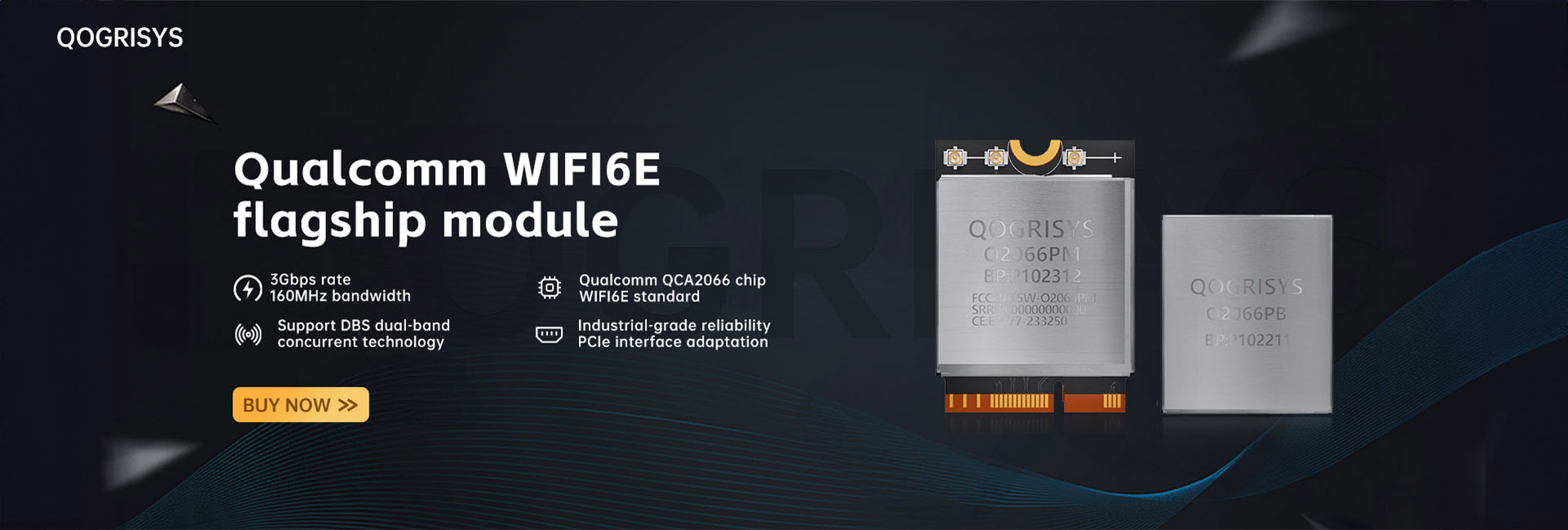
9th to 11th, 2026 , the 27th China International Optoelectronic Exposition (CIOE), in conjunction with the IICIE International Integrated Circuit Innovation Expo and Elexcon Shenzhen International Electronics Exhibition & Embedded Systems Exhibition, will be held concurrently at the Shenzhen World Exhibition & Convention Center. The three exhibitions will be held together, covering a total exhibition area of 320,000 square meters, bringing together more than 5,000 exhibitors and attracting over 240,000 professional visitors . This is a grand industry event covering the entire optoelectronics, semiconductor, and electronics industry chain.   For the Wi-Fi module industry, this exhibition sent a clear signal: the value proposition of Wi-Fi 7 modules is undergoing a fundamental shift—from providing "high-speed connectivity channels" to becoming "industrial-grade intelligent nodes" that integrate sensing, positioning, and edge intelligence. The Industry Logic Revealed by the Collaboration of Three Exhibitions: Why "Sensory Integration" Has Become a Must-Answer Question The essence of the three exhibitions working together is a forced "alignment" of the upstream and downstream of the industry chain. In the past, the optoelectronic industry focused on optical chips and devices, the semiconductor industry focused on chip design and advanced packaging, and the electronics industry focused on the development of terminal equipment and embedded systems. The three major industry systems were fragmented, with different technical standards and poor supply and demand matching, forming obvious industry barriers . The rapid popularization of large-scale AI models and supercomputing clusters has changed this landscape. The industry's demand for ultra-high bandwidth, ultra-low power consumption, and ultra-high integration has increased significantly. The previously independent industry boundaries have been completely broken down. Optical engines and switching chips are deeply integrated, and optoelectronic devices are directly embedded inside chip packages, forcing optical design, semiconductor processes, advanced packaging, and electronic systems to develop in a coordinated manner . This trend is particularly evident in the Wi-Fi module industry. Wi-Fi 7 is not only a generational upgrade in communication speed, but also provides a technological foundation for "integrated communication and sensing" due to its introduction of Multi-Link Operation (MLO), 320MHz channels, and fine-grained timing measurement capabilities. The China Academy of Information and Communications Technology (CAICT) explicitly proposed in its research report on 10 Gigabit AI Park Networks that wireless access points should be upgraded to "integrated communication and sensing" anchor points, natively integrating IoT access, environmental perception, and terminal positioning capabilities to break the data silos and protocol fragmentation dilemmas caused by traditional siloed network construction. The competitive logic in the module industry has therefore undergone a qualitative change: connectivity itself is "depreciating," and "intelligent connectivity" that integrates perception and edge intelligence is the new pricing power. The triple capability leap of Wi-Fi 7 modules The "integration" of Wi-Fi 7 modules is not a functional aggregation, but rather a fusion of capabilities at the underlying chip architecture level. Solutions represented by Qualcomm FastConnect C7700 (chip code name QCC2072) integrate three capabilities that previously belonged to different radio frequency domains on a single chip. The first capability: an industrial-grade leap in Wi-Fi 7 communication performance. The QCC2072 supports 320MHz channel bandwidth, 4096-QAM modulation, and 2×2 MU-MIMO, achieving a peak PHY rate of 5.8 Gbps . Its introduced Enhanced Multi-Link Single Radio (eMLSR) technology allows data to be transmitted through other links when interference occurs in a certain frequency band, effectively maintaining high throughput and low latency . This is crucial for deterministic transmission requirements in industrial environments. The second capability: Wi-Fi sensing and high-precision positioning. This chip solution supports IEEE 802.11az Wi-Fi ranging. 802.11az uses Time-of-Flight (ToF) technology to measure the actual distance between the device and the access point, replacing the traditional RSSI fingerprint comparison method, achieving sub-meter positioning accuracy of less than 1 meter. In industrial scenarios, this means that the Wi-Fi module can not only transmit data but also accurately sense the device's location and spatial status. The third capability: Bluetooth 6.0 Channel Sounding and Aux Radio. Bluetooth 6.0 introduces Channel Sounding technology, improving Bluetooth positioning accuracy to sub-meter levels . Simultaneously, this solution is equipped with a dedicated Wi-Fi Aux Radio for background scanning and low-latency listening while the main radio is in sleep mode, balancing power consumption and response speed . The integration of these three capabilities enables a single Wi-Fi 7 module to possess integrated "communication + sensing + positioning" capabilities for the first time. VOXMICRO's AIRETOS C27 industrial-grade module is a typical example of this architecture. It integrates capabilities that were previously belonging to three independent radio frequency domains into a single module package, enabling industrial OEMs to shift their design goals from "adding a radio" to "accomplishing more tasks with a single industrial-grade module" . Market data: The inflection point for the large-scale deployment of Wi-Fi 7 modules has arrived. The global Wi-Fi module market is currently experiencing a period of structural growth. According to market research reports, the global Wi-Fi module market size is projected to reach US$16.82 billion in 2026, a 17.9% increase from US$14.27 billion in 2025. Among these, Wi-Fi 7 modules are rapidly increasing their market share to 17.2%, with projected shipments reaching 234 million units for the year . From a broader perspective, the global Wi-Fi 7 module market was valued at $3.8 billion in 2025 and is projected to reach $22.6 billion by 2034, representing a CAGR of 21.9% . The Wi-Fi Alliance predicts that global shipments of Wi-Fi 7 devices will reach approximately 1.1 billion units in 2026, of which approximately 196 million will be IoT devices. The Industrial Internet of Things (IIoT) is one of the fastest-growing sub-sectors. Global demand for IIoT modules is projected to reach $9.81 billion, with an annual growth rate of 17.8% . The reliability requirements of industrial applications—wide operating temperature range, interference resistance, and deterministic low latency—are driving the accelerated evolution of Wi-Fi 7 modules from consumer to industrial applications. Qogrisys early strategic moves: from chip solutions to module productization O2072PM and O2072PB, launched simultaneously by O2072 with the QCC2072 chip, is not simply an expansion of the product line, but rather an engineering choice for different deployment scenarios. The O2072PM uses an M.2 Key E standard interface (2230 specification), a 2T2R dual-antenna design, and supports both Wi-Fi and Bluetooth operation. This module incorporates all the functions of the QCC2072: the Wi-Fi portion covers the full IEEE 802.11a/b/g/n/ac/ax/be standards, supporting tri-band 2.4 GHz/5 GHz/6 GHz, with a channel bandwidth of up to 40 MHz at 2.4 GHz, 160 MHz at 5 GHz, and 320 MHz at 6 GHz. The Bluetooth portion is compatible with Bluetooth 6.0, supporting LE Audio, 2 Mbps BLE, and high-precision distance measurement (HADM channel sounding) . In terms of driver adaptation, the O2072PM has been adapted and is running stably on Intel x86 platforms with kernels 5.15.24+, 6.1.99, and 6.12.0. The O2072PB uses a 13×15mm surface mount package, targeting space-constrained embedded scenarios. Its core functions are identical to the O2072PM, also supporting a peak data rate of 5.8 Gbps, a 320MHz channel, 4K QAM modulation, Bluetooth 6.0 channel detection, and 802.11az Wi-Fi ranging . The O2072PB explicitly supports various operating modes including AP/AP+STA/P2P/Monitor, providing a PCIe interface for Wi-Fi and a UART/PCM interface for Bluetooth, supporting Class 1 and Class 2 power level transmission without the need for an external power amplifier . The differentiated positioning of the two modules reflects a profound change in the module industry: as chip capabilities become highly integrated, the core competitiveness of module manufacturers is shifting from "how much throughput can be achieved" to "whether the full capabilities of the chip can be efficiently released under specific physical constraints." The M.2 interface module targets industrial PCs, gateways, and edge computing devices that require standard slots and replaceable designs; the surface-mount module targets embedded terminals with extremely limited PCB space, requiring module manufacturers to possess more refined engineering capabilities in RF design, antenna matching, and thermal management. Validation in industrial scenarios: from technical feasibility to deployment Wi-Fi 7 sensing technology is being practically validated in industrial scenarios. In the mining sector, Shanxi Coal International's Hequ Open-pit Coal Mine's pilot project of a 10-gigabit optical network based on 50G-PON + Wi-Fi 7 has passed the Ministry of Industry and Information Technology's acceptance test. Fifty-seven Wi-Fi 7 gateways have been deployed in the core area, allowing dispatchers to remotely control unmanned mining trucks several kilometers away via Wi-Fi 7 tablets. In the field of smart buildings, the Longgang International Art Center uses Wi-Fi 7 + CSI sensing technology to accurately detect the presence of people, achieving a reduction of over 15% in venue energy consumption and a 30% improvement in operation and maintenance efficiency . These cases share a common characteristic: Wi-Fi networks are no longer just for data transmission, but have also become the infrastructure for environmental sensing and spatial positioning. For the module industry, this means that downstream customers' needs are upgrading from "providing stable wireless connectivity" to "providing integrated capabilities that converge connectivity, sensing, and positioning." Conclusion The industry landscape revealed by the three exhibitions is clear and definite: the demand for AI computing power is driving the deep integration of the optoelectronics, semiconductor, and embedded electronics industries, and Wi-Fi 7 modules are at the intersection of this integration. The shift from "high-speed connectivity" to "integrated sensing" is not just a product iteration, but a systemic reconstruction of the value proposition of the module industry. For Wi-Fi module manufacturers, their ability to establish competitive advantages in chip solution integration, cross-platform adaptation, and industrial-grade reliability will determine their position in the new industry cycle. However, the real test lies in whether module manufacturers can continue to efficiently translate chip capabilities into deployable industrial-grade products as "integrated sensing" transitions from a technological trend to an industry standard.  

2026

09/14

Small Size, Low Power, High Stability: The Ultimate IoT Module Solution
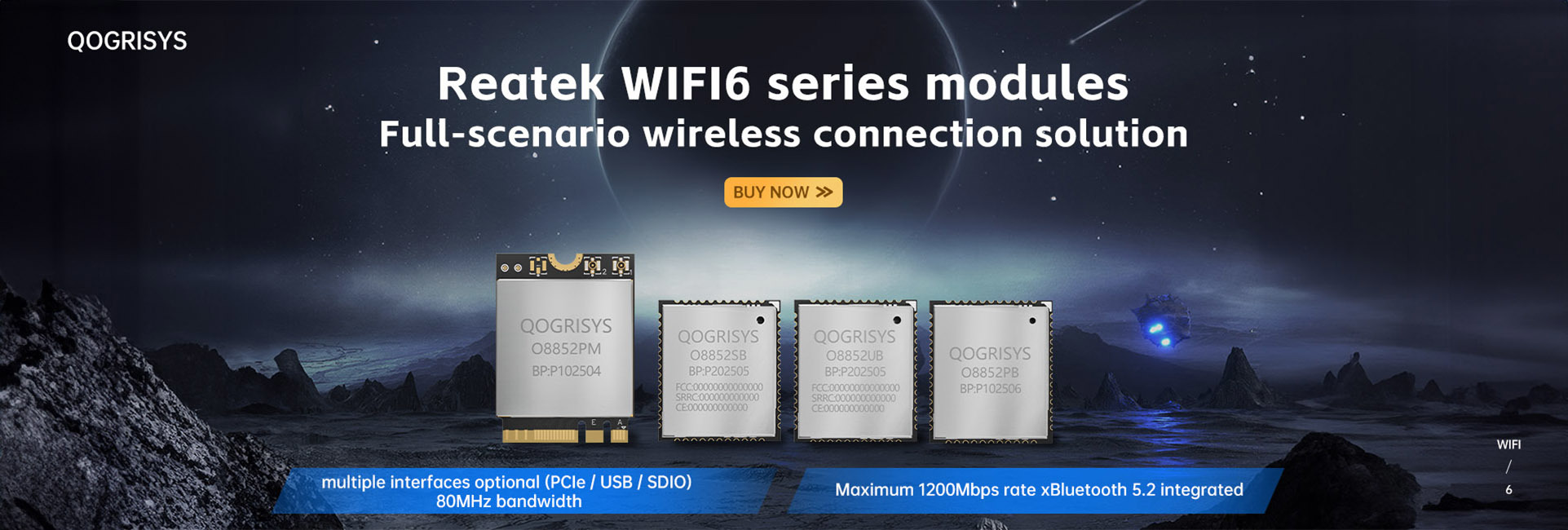
I. The "Impossible Triangle" of IoT Terminals With the rapid iteration of IoT terminals, more and more devices are moving towards miniaturization and battery power, while products are facing design challenges such as limited PCB space, insufficient battery life, and unstable wireless connectivity . This is not an isolated phenomenon in a particular sub-sector, but rather a systemic challenge facing the entire Internet of Things (IoT) industry. In 2026, global shipments of wireless modules reached 870 million units, with a market size exceeding US$41.2 billion. By 2030, global shipments are projected to climb to 1.52 billion units, with a CAGR of 11.8%, and the market size is expected to reach US$79.8 billion. During the same period, the number of connected IoT devices worldwide is expected to exceed 39 billion. This explosive growth in device numbers is amplifying the challenges of every design dimension into key factors determining product success or failure. Small size, low power consumption, and high stability—these three requirements are forming the "impossible triangle" in IoT terminal design. In traditional solutions, these three often constrain each other: pursuing small size limits antenna performance, pursuing low power consumption sacrifices transmission rate, and pursuing stability increases power consumption and size. Finding a balance among these three has become a core issue for module solution providers. II. Challenge 1: Extremely tight PCB space Industrial driving force of space compression From smart rings and TWS earphones to micro sensors and smart locks, the physical space of terminal devices is being continuously compressed. The micro battery market is projected to grow from $1.59 billion in 2025 to $1.81 billion in 2026, representing a CAGR of 13.5%. This rapid growth in the micro battery market is a direct reflection of the trend towards device miniaturization —the smaller the device, the higher the requirements for battery volume and energy density. One of the most challenging problems faced by hardware engineers is achieving high-density, high-stability electrical connections between the daughterboard and the motherboard under extremely limited overall device thickness and PCB space. As an indispensable radio frequency component in the device, the footprint of the wireless module directly determines the feasibility of the overall device layout. Solution path for miniaturized modules The industry is addressing the spatial challenges from multiple perspectives. The O9101SA module from Qogrisys has compressed its size to 12×12mm , while supporting dual-band Wi-Fi 6 and BLE 5.4 with speeds up to 600Mbps . This size is among the industry-leading levels for Wi-Fi 6 + Bluetooth Combo modules. This extreme size reduction not only allows for more space to be packed in, but also frees up valuable PCB space for other components such as the battery, sensors, and main control chip – the smaller module footprint allows for more storage . Multi-protocol single-chip integration is another key path. Two independent modules, plus their respective peripheral circuits and antenna clearance, occupy a much larger PCB area than a single multi-protocol integrated module. In small-sized products such as smart bulbs and panel switches, this area is the biggest limiting factor. The Wi-Fi/Bluetooth Combo solution fundamentally reduces PCB footprint by integrating the two protocols into a single chip. The area occupied by antennas is also significant. Traditional antenna implementations consume 15%-25% of the total PCB area in mobile devices and IoT applications. The emergence of antenna-in-package (AiP) technology integrates the antenna into the module package, achieving space savings of 40%-60% . Challenge 2: Severely Inadequate Battery Life The Economics of Range Anxiety For battery-powered IoT devices, battery life is not a "nice-to-have" but a "life-or-death" issue. The global IoT battery market was valued at $15.9 billion in 2024 and is projected to grow to $36.88 billion by 2033, representing a CAGR of 9.8%. This continued expansion reflects the rigid demand from end devices for longer battery life. The operational lifespan of battery-powered nodes directly impacts maintenance costs and deployment scalability . The industrial value of low power consumption technology The low-power Wi-Fi module market is projected to reach $4.142 billion in 2025 and $11.79 billion in 2032, representing a CAGR of 16.4%. The BLE module market is expected to grow to $68.27 billion in 2032, with a CAGR of 13.80%. The robust growth of these two segments confirms that low power consumption has become one of the most crucial competitive dimensions in the module industry. IV. Challenge 3: Unstable wireless connection Crowded 2.4GHz and limited antennas The root cause of unstable wireless connections lies in two structural contradictions. The first problem is frequency congestion. The 2.4GHz ISM band is shared by multiple protocols such as Wi-Fi, Bluetooth, Zigbee, and Thread, resulting in severe co-channel interference. In high-density deployment scenarios such as smart homes and offices, signal conflicts and data rate degradation are commonplace. The second contradiction is the limitation of antenna performance. Device miniaturization means that the available space for the antenna is compressed, and the antenna efficiency and bandwidth decrease accordingly. There is an inherent physical constraint between radio frequency performance and device size —the smaller the antenna size, the lower the radiation efficiency, and the worse the communication distance and stability. V. Qogrisys Systemic Solutions To address the aforementioned triple design challenges, QOGRISYS offers a comprehensive product portfolio, providing end-to-end solutions from chips to modules and from hardware to software. Extremely Miniaturized Product Matrix Qogrisys has achieved complete coverage in the field of small-sized modules, from Wi-Fi 6 to Wi-Fi 5, and from Combo to single Wi-Fi. The O9101SA boasts a compact size of 12×12mm , supports dual-band Wi-Fi 6 and BLE 5.4 with speeds up to 600Mbps, and utilizes an SDIO 3.0 interface . It supports a 2.4GHz/5GHz dual-band simultaneous (DBS) architecture , uplink/downlink MU-OFDMA and MU-MIMO, and BT/BLE dual-mode operation . The O9101SA, along with the O9101UE and O9101UD, belongs to the Oufixin 1×1 Wi-Fi 6 module series developed based on the WQ9101 chip . The O9101UE measures 13×12.2mm and uses a USB 2.0 interface; the O9201SB measures only 13×15mm, is also based on the WQ9201 chip, and offers speeds up to 1200Mbps. The O9201UB shares the same platform as the O9201SB and uses a USB 2.0 interface. The O8852PB measures 13×15mm, is based on the Realtek RTL8852BE chip, supports Wi-Fi 6 and Bluetooth 5.2 with a speed of 1200Mbps, and uses a PCIe interface. For scenarios with stricter space constraints, the small size of these modules is particularly advantageous. The smaller module footprint frees up valuable PCB space for other components such as the battery, sensors, and main control chip. Low-power design: Co-optimization from chip to system Qogrisys's low-power capability stems primarily from the selection and deep collaboration with upstream chips. The Wuqi WQ9201 chip, with its stable transmission performance and internationally leading low-power consumption , stood out from 364 products from 280 chip companies, winning the 2024 "China Chip" Excellent Technological Innovation Product Award. Interference Resistance and Stable Connection: Breakthrough Technologies in Dual-Band and Multi-Protocol Integration O9201SB, O9101UE , and O8852PB all support 2.4GHz/5GHz dual-band Wi-Fi 6. The core value of the dual-band architecture lies in "selectivity"—when the 2.4GHz band becomes congested due to the coexistence of protocols such as Bluetooth and Zigbee, the device can switch to the 5GHz band to ensure transmission speed and connection stability. Dual-band Wi-Fi 6 also brings core technologies such as OFDMA and MU-MIMO, improving spectrum utilization efficiency in scenarios with multiple concurrent devices. In high-density deployment environments such as smart homes and offices, these technologies directly translate into improved user experience—lower latency, fewer dropped connections, and more stable connections. Multi-protocol integration is another approach. A single module can simultaneously support multiple protocols such as Wi-Fi, Bluetooth, Zigbee, and Thread, and can intelligently select the best connection method according to the environment, flexibly switching between different scenarios. VI. Industry Outlook: From "Usable" to "Effective" Looking ahead to 2026-2032, the design trend for small-size, low-power modules will continue to evolve along the following directions: First, the limits of size will continue to be broken . The competition for module size is far from over, and the approach of physical limits is forcing continuous innovation in packaging technology. Secondly, low power consumption will shift from a "feature" to a "standard feature." QYResearch data shows that the low-power Wi-Fi module market will continue to expand at a compound annual growth rate of 16.4%. Low power consumption will no longer be a differentiating selling point for high-end modules, but rather a basic requirement for all module products. Third, multi-protocol integration, miniaturization, and low power consumption will be deeply intertwined. Integrating multiple protocols such as Wi-Fi, Bluetooth, Zigbee, and Thread onto a single chip is a fundamental solution to the space and power consumption issues. The widespread adoption of the Matter protocol will further strengthen this trend— future modules will no longer require users to "select" protocols, but will automatically adapt to the optimal connectivity solution based on the environment and application. Fourth, module selection is evolving from "component procurement" to "strategic decision-making." Under the dual constraints of miniaturization and low power consumption, module selection is no longer merely a comparison of technical parameters, but a strategic choice concerning product definition, development cycle, and time-to-market. A suitable module solution can compress the development cycle from months to weeks and simplify a four-layer PCB to a two-layer PCB .  

2026

09/09